
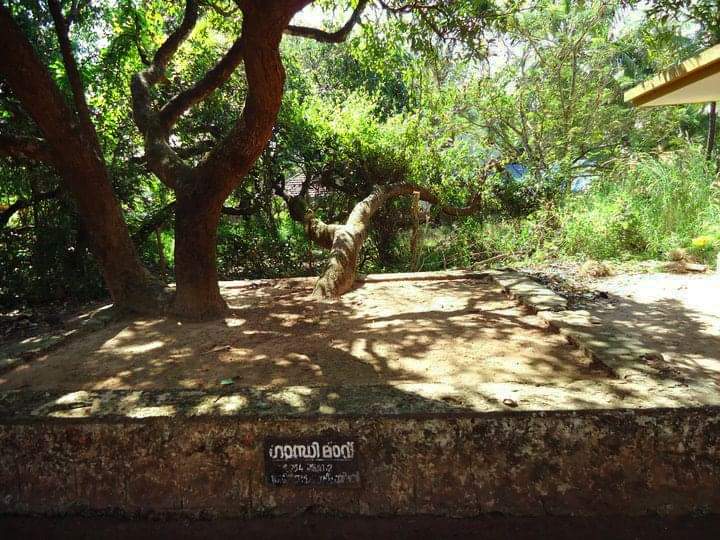
The Mango Tree Planted by Mahatma Gandhi in Kerala 🌳🇮🇳
Among Kerala’s many historical memories, one of the most charming is associated with a mango tree traditionally linked to Mahatma Gandhi. More than a tree, it represents a small but enduring connection between Kerala’s landscape and the life of one of India’s most influential leaders.
Gandhi visited Kerala several times during the freedom movement, meeting people, addressing public gatherings and supporting social reform. His visits became important moments in the state’s modern history, particularly during campaigns connected with social equality, education, and India’s struggle for independence.
The mango tree associated with Gandhi adds a wonderfully personal dimension to that history. While monuments and memorials often commemorate great historical figures through stone and buildings, a living tree offers something different—it continues to grow, change with the seasons and remain part of the everyday landscape.
A Living Memory of Gandhi 🌿
A tree connected with a visit by Gandhi can be appreciated not only for its botanical or historical significance but also for the story it represents. Imagine a moment decades ago when Gandhi, surrounded by people who had gathered to see him, planted a young sapling. Today, that small act has become part of local heritage.
Mango trees have a particularly familiar place in Kerala’s cultural landscape. They are associated with summer, village homes, childhood memories, traditional gardens and the agricultural heritage of the state. This makes a Gandhi-associated mango tree especially evocative—a national historical memory rooted in an ordinary and recognisable part of Kerala’s countryside.
Gandhi and Kerala
Gandhi’s relationship with Kerala was significant. His visits brought him into contact with people from different communities and drew national attention to social issues affecting the region.
One of the most important episodes was his involvement with the Vaikom Satyagraha, the historic movement against caste-based restrictions around the Vaikom Mahadeva Temple. Gandhi visited Vaikom in 1925 and held discussions with leaders and local communities during the movement.
His later visits to Kerala also included meetings and public programmes connected with the freedom movement and social reform.
More Than a Tourist Attraction
For travellers interested in Kerala history and India’s independence movement, places associated with Gandhi can provide a different kind of sightseeing experience.
Instead of simply viewing an impressive monument, visitors encounter a physical reminder of a historical moment. A tree, a building, a road or a meeting place can sometimes tell a story in a remarkably intimate way.
The mango tree therefore represents more than its age or appearance. It serves as a reminder of Gandhi’s journeys through Kerala and of the broader social and political changes taking place during his lifetime.
A Living Heritage of Kerala
Historical trees have a special quality because they are living monuments. Unlike a stone memorial, they continue to grow and interact with their surroundings. Their branches provide shade, their leaves change with the seasons, and their presence connects generations of local residents with stories from the past.
A mango tree associated with Mahatma Gandhi captures this beautifully.
It is history that doesn’t simply stand in a museum—it grows. 🌳❤️
For anyone exploring Kerala’s heritage, such places offer an opportunity to look beyond the state’s famous beaches, backwaters and hill stations and discover the people, stories and memories that have shaped Kerala’s modern history.