
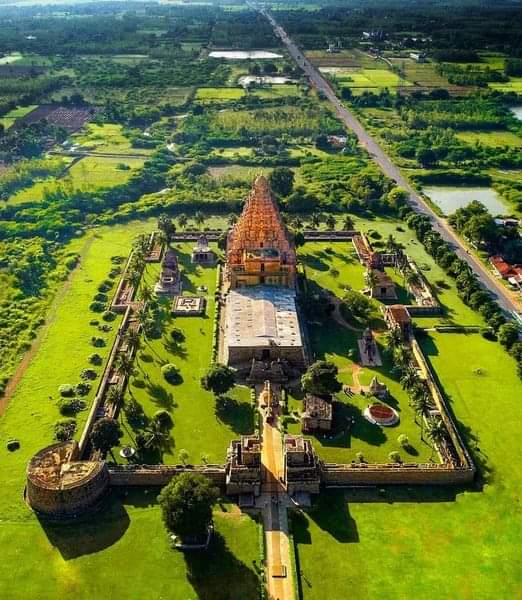
Gangaikonda Cholapuram: History in Stone
Rising majestically from the landscape of Tamil Nadu, Gangaikonda Cholapuram is one of the finest surviving monuments of the mighty Chola dynasty. At its heart stands the magnificent Gangaikondacholeeswaram Temple, a masterpiece of Chola architecture built more than a thousand years ago. Its towering vimana, elegant proportions, richly carved stonework, and remarkable sculptures offer visitors a glimpse into an era when the Cholas were among the most powerful kingdoms in South India.
The temple was commissioned in the 11th century by Rajendra Chola I, the son and successor of the celebrated Chola ruler Rajaraja Chola I. Rajendra Chola established Gangaikonda Cholapuram as his new capital after his successful military expedition towards northern India. The city became an important political, cultural, and religious centre of the Chola Empire and remained closely associated with Chola power for several generations.
A Name That Tells a Story
The name Gangaikonda Cholapuram has a fascinating meaning. It can be understood as “the city of the Chola who conquered the Ganga.” The name commemorates Rajendra Chola I’s northern campaign, during which his armies reached regions associated with the River Ganga.
According to traditional accounts, Rajendra Chola brought sacred Ganga water back to his southern kingdom as a symbol of his victory. The water was ceremonially associated with his new capital and its great temple complex. The story reflects not only the military ambitions of the Chola ruler but also the religious and symbolic importance attached to the Ganga in Indian culture.
A Masterpiece of Chola Architecture
The Gangaikondacholeeswaram Temple is dedicated to Lord Shiva and demonstrates the sophistication of medieval Chola architecture. Its imposing central tower rises dramatically above the surrounding landscape, while the carefully proportioned structure creates an impression of both strength and elegance.
Although the temple resembles the architectural tradition established at Brihadisvara Temple in Thanjavur, it has its own distinctive character. The tower is noted for its graceful, slightly curved profile, giving the monument a softer and more elegant appearance than the more rigidly geometric silhouette of some earlier Chola temples.
The temple’s walls and stone surfaces are decorated with intricate carvings depicting deities, mythical figures, dancers, guardians, and scenes connected with Hindu religious traditions. Every sculpture reflects the extraordinary skill of the artisans who worked in stone more than a millennium ago.
Sculptures That Bring History Alive
One of the most remarkable aspects of Gangaikonda Cholapuram is its collection of sculptures. The temple’s stone figures are not merely decorative; they provide valuable insights into the artistic traditions, religious beliefs, clothing, jewellery, and cultural life of the Chola period.
Graceful representations of Hindu deities stand alongside finely detailed architectural elements. The expressions, postures, ornaments, and flowing forms demonstrate the extraordinary attention to detail achieved by Chola sculptors.
Walking around the temple, visitors can appreciate how architecture and sculpture were integrated into a single artistic vision. The stone seems to move between monumental architecture and delicate craftsmanship, creating a timeless atmosphere.
The Sacred Water Tradition
The association of Ganga water with the city is one of the most fascinating traditions connected with Gangaikonda Cholapuram. Historical and traditional accounts describe the bringing of water from the Ganga after Rajendra Chola’s northern expedition.
The water was associated with the great temple tank known as Chola Gangam, which became an important symbol of the king’s achievement. Traditional descriptions of the tank emphasise its enormous scale and sacred significance.
Whether experienced as history, tradition, or legend, the story adds another fascinating dimension to the monument. It demonstrates how Rajendra Chola sought to connect his southern empire with the prestige and sacred symbolism of the Ganga.
A Window into the Chola Empire
Gangaikonda Cholapuram was far more than a temple. It was part of a great imperial capital that represented the political strength, economic prosperity, artistic achievement, and religious traditions of the Chola Empire.
During the Chola period, the region was connected to an extensive network of administration, agriculture, trade, temple institutions, and maritime activity. Chola influence extended across much of southern India and into parts of Southeast Asia, making the dynasty an important force in the history of the Indian Ocean world.
Today, only parts of the former capital survive, but the temple remains an extraordinary reminder of the city’s former grandeur.
A UNESCO World Heritage Connection
Gangaikondacholeeswaram Temple forms part of the group known as the Great Living Chola Temples, together with the Brihadisvara Temple at Thanjavur and the Airavatesvara Temple at Darasuram. These monuments are recognised for their outstanding examples of Chola architecture, sculpture, and religious art.
The designation highlights the exceptional cultural importance of these temples and their role in preserving the artistic achievements of the Chola period.
Visiting Gangaikonda Cholapuram
For travellers interested in Tamil Nadu heritage, temple architecture, history, photography, and South Indian culture, Gangaikonda Cholapuram offers a memorable experience. The temple’s relatively peaceful surroundings allow visitors to appreciate its architecture without the atmosphere of a crowded urban monument.
The best way to experience the site is to take time to walk around the temple, observe the sculptures closely, study the architectural details, and imagine the grandeur of the Chola capital that once surrounded it.
Gangaikonda Cholapuram is ultimately more than an ancient temple. It is history preserved in stone—a monument to Rajendra Chola’s imperial ambitions, the artistic genius of Chola craftsmen, and a remarkable chapter in the cultural history of South India. More than a thousand years after its construction, its sculptures, architecture, and stories continue to connect modern visitors with the extraordinary world of the Cholas.